
Fort Lauderdale is built on water it has to keep managing. The New River, the Intracoastal, and the finger islands of Las Olas, Rio Vista and Coral Ridge all depend on maintained depth, and silt does not stop arriving because a canal was dredged once. We get called most often when a boat that used to clear a canal at low tide now touches bottom, or when a dock’s pilings are suddenly standing in mud instead of water.
Why canals here silt up faster than owners expect
Every rain event moves soil off the banks and into the canal, and in a city with this much boat traffic, prop wash keeps that sediment suspended until it settles somewhere inconvenient, usually the dead end of a finger canal. Add storm debris and organic material and you get a soft layer that looks minor from the surface and takes a real bite out of usable depth.
The complicating factor in Broward is what is already in the sediment. Canal bottoms in older neighborhoods can carry contaminants from decades of urban runoff, which changes how material has to be tested, handled and disposed of. A dredge plan that ignores that is not a plan, it is a surprise invoice.
Permitting for dredging in Broward County
Dredging in Fort Lauderdale touches several regulators at once: the US Army Corps of Engineers, Florida DEP, Broward County’s Environmental Protection and Growth Management Department, and the City of Fort Lauderdale. Manatee and seagrass protections apply, and the disposal location often needs its own approval, which is frequently the slowest part of the whole project. We map depth, volume and disposal before we quote, so the number you get reflects the permit you can actually obtain.
How we approach a Fort Lauderdale dredge
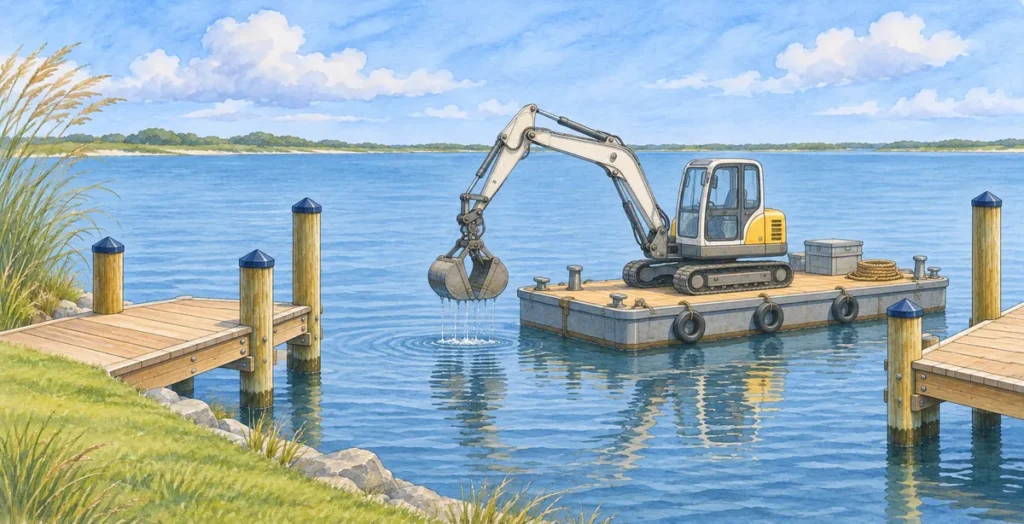
We start with a bathymetric survey so the volume is measured rather than estimated, then agree the target depth with you based on the draft you need to float. Mechanical dredging suits most finger canals because it is precise and limits turbidity. Where access is tight, we work from a small barge or shore-based equipment to avoid closing a canal that neighbors still need to use.
Spoil handling is planned from day one: dewatering, hauling and the paperwork trail for disposal. If the material is clean and suitable, it sometimes goes back to work as fill or bank stabilization instead of leaving the site.
Find out what your canal actually has left
If your boat is touching bottom or your lift is sitting in mud, we can survey the channel and give you a measured volume and a clear scope. Call (772) 418-6400 to schedule, or request a dredging assessment online.
Related services and nearby work
This page is part of our marine construction in Broward County. See all marine construction services or browse completed projects.
Nearby local pages
Coordinating access improvements with a dock project? See dock construction in Broward County.
